Food production lines: Design & Optimization
Key factors in food production line design
Effective food production line design starts long before equipment is installed. It begins with a detailed understanding of production requirements, material flow, and the operating conditions that must be maintained throughout the process.
Learn more: Food processing machinery: How to choose the right equipment and what to consider
Production requirements and process flow
Every research and development effort should begin with a clear definition of what the line is expected to achieve. Production capacity, product characteristics, processing stages, operating hours, and packaging requirements all influence the final configuration.
The sequence of operations is equally important. Raw materials or packaged goods should move from one stage to the next with controlled transitions and as few unnecessary handling steps as possible. If one section operates faster than the following stage can accommodate, accumulation can occur. If it operates too slowly, downstream equipment may remain idle.
This is why process flow analysis is essential. It allows engineers to evaluate the complete production sequence, identify capacity mismatches early, and determine how each stage should interact with the rest of the line.
Equipment integration and product handling
Individual machines may perform their own functions effectively, but the performance of a food production line depends on how well they operate together.
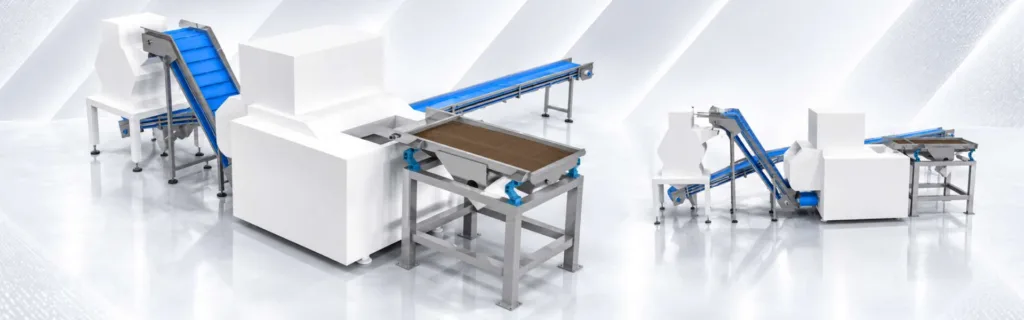
Conveyors, elevators, processing equipment, filling systems, and other machinery must be coordinated according to throughput, speed, product orientation, and transfer requirements. Even a relatively small inconsistency between two stages can affect the stability of the entire process.
Product handling also requires careful engineering. Glass jars and bottles, for instance, have very different handling requirements from cherries, peaches, tomatoes, or viscous fruit puree. Conveyor geometry, belt or roller selection, transfer distances, and changes in direction must therefore be designed around the physical characteristics of what is being transported.
The objective is controlled movement. Products should reach each processing stage in the correct position and at the required rate, without unnecessary impact, accumulation, or manual intervention.
Read also: R&D in Industry: What It Is and Why It Is Critical
Layout, operator access, and maintenance
Available floor space often places practical limits on the design of an industrial installation. However, fitting equipment into the available area is only one part of layout planning.
Operators need sufficient space to monitor and control the line. Maintenance teams must also be able to reach motors, bearings, drives, cleaning points, and other critical components without complicated dismantling procedures.
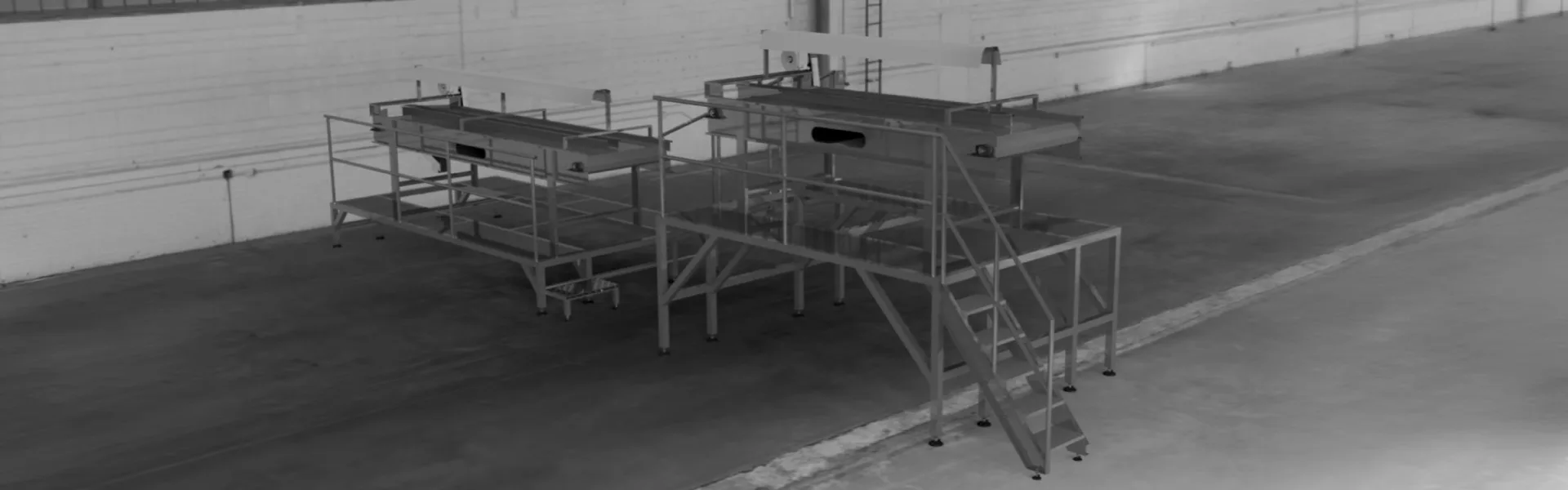
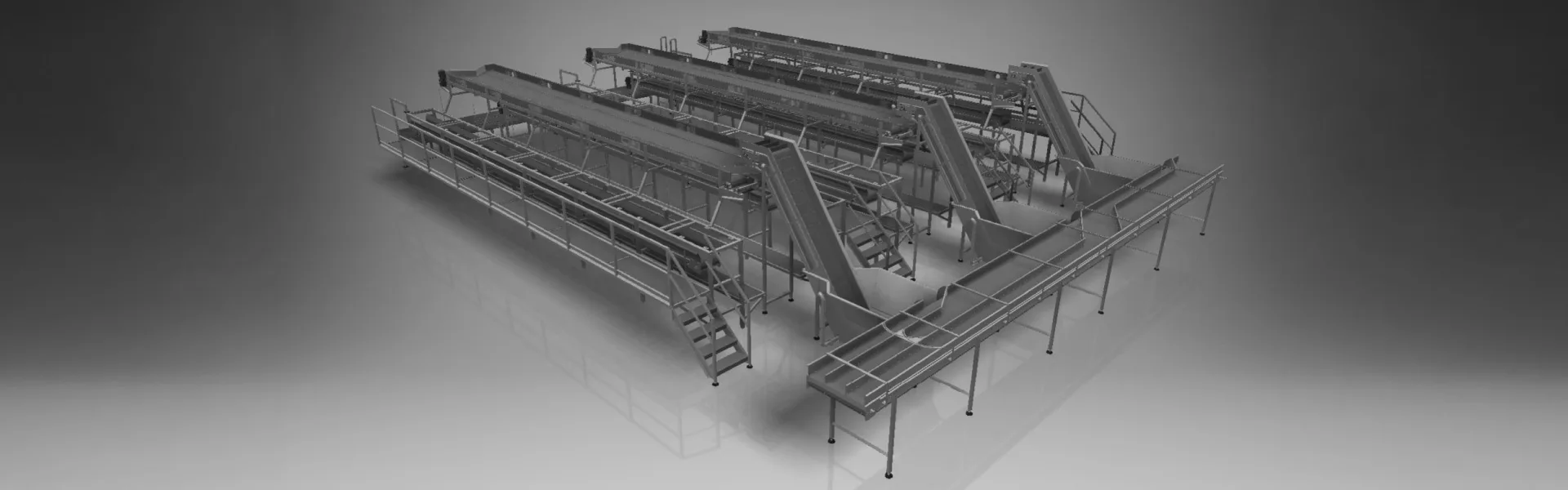
Where machinery is installed at height, suitable access structures may also be necessary for inspection and cleaning. These considerations may appear secondary during the early design stage, but they can have a substantial effect on daily operation.
A compact layout is useful only when it remains practical. Designing adequate access from the beginning can shorten maintenance interventions, simplify routine inspections, and reduce the time required to return equipment to operation.
Hygiene, materials, and cleanability
Hygienic design is a fundamental requirement in industrial food processing. Materials and construction methods must be appropriate for the operating environment, particularly in areas that come into contact with food, liquids, moisture, or cleaning agents.
Stainless steel is widely used in these applications because of its durability and suitability for environments where frequent cleaning is required. Yet material selection alone is not enough.
Equipment geometry also matters. Surfaces, joints, frames, conveyors, and difficult-to-access areas should be designed so that cleaning can be performed effectively. At the same time, unnecessary points where residues or liquids may accumulate should be limited wherever possible.
Cleanability should therefore be considered during mechanical design rather than addressed after installation. The easier a line is to access, inspect, and clean, the easier it becomes to maintain consistent operating conditions.
Flexibility for future production needs
What happens if production volume increases in two years? Or if another processing step needs to be added?
A production line designed only around today’s requirements may become restrictive as operational needs change. For this reason, engineers should consider possible future modifications during the initial planning stage.
Flexibility can involve reserving space for additional machinery, designing conveyor routes that can be modified, or creating sections that can accommodate changes in capacity and handling requirements.
The purpose is not to build unnecessary capacity from the outset. It is to avoid design decisions that make future adaptation unnecessarily difficult or expensive.
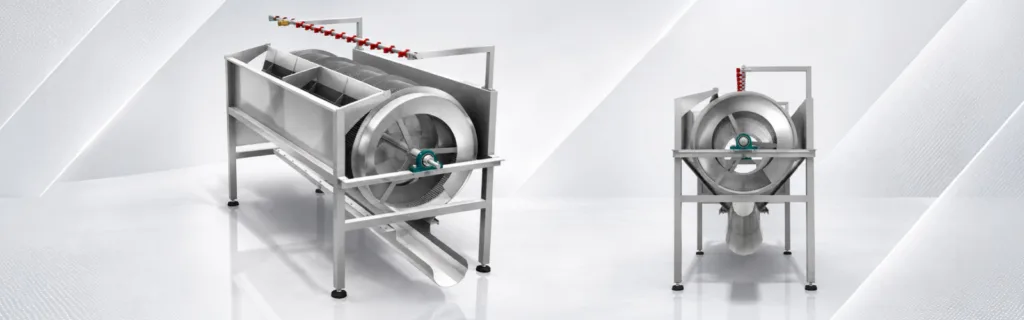
You may be interested in: Welding & fabrication: Complete solutions for metal structures
How to optimize an existing food production line
Optimization starts with identifying where the line loses time, capacity, or consistency. Rather than focusing on individual machines, the entire production flow should be evaluated to find the actual source of each constraint.
Key areas to examine include:
- Analyze throughput and bottlenecks: Compare actual production rates with the required capacity and identify where products accumulate, equipment remains idle, or cycle times become inconsistent.
- Review transfer points and conveyor routing: Poorly designed transitions between machines can interrupt product flow, create unnecessary handling, or limit downstream capacity.
- Synchronize equipment capacities and operating speeds: Each stage should operate at a rate that supports the overall process and minimizes repeated starts, stops, and accumulation.
- Reduce unnecessary manual handling: Improved conveying or mechanical handling can create a more controlled and consistent production flow.
- Improve cleaning and maintenance access: Easier access to critical components can reduce the time required for routine cleaning, inspection, and maintenance.
- Adapt existing machinery where possible: Modifying conveyor sections, layouts, or individual components may resolve a constraint without replacing the entire line.
- Evaluate performance after each modification: Monitoring the line after an intervention helps verify the improvement and identify any new constraints.
The goal is a balanced food production line, where each stage supports consistent throughput and reliable day-to-day operation.
Custom engineering for different food production processes
Food-processing applications vary considerably in terms of materials, production capacity, handling requirements, and layout. Arrowhead Engineers develops machinery and integrated systems around these specific operating conditions.
Indicative applications include:
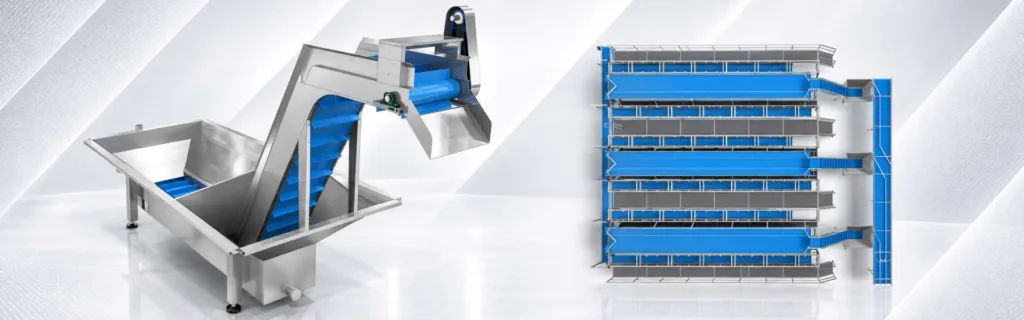
- Conveying and product transfer: The FTC 18 Belt Conveyor supports the transport of sensitive and viscous materials such as fruit or vegetable puree, while the FTC 03 Conveyor Belt for Various Products is designed for jars, bottles, and other packaging. Directional changes can be managed with the FDR 04 & 08 Conveyor Turning Belt, while the Roller and Cherry Rotary Elevator provide further options for product transfer.
- Washing and preparation: The Bottle Washing Line integrates bottle transport, inversion, washing, and transfer toward filling operations. For fruit processing, the Laundry and Elevator combines washing and elevation, while the Tank Peeler supports specific preparation requirements.
- Fruit handling, sorting, and processing: Systems such as the FRL10 Cherry Roller, Kerian – Roller Loft, Food Calibration, and Peach Cup Down address different sorting, calibration, handling, and orientation requirements. More extensive processes can be supported by the Cube Line, Peach Cutting Line, and Cherry Line.
- Filling, mixing, and thermal processing: The Syrup Filler Machine, Kneading Machine, and Pasteurization system cover different stages of filling, mixing, and thermal treatment.
- Access and operational support: Stainless Steel Platforms can provide practical access to elevated equipment for operation, inspection, cleaning, and maintenance.
Each system can then be configured according to the wider process, ensuring that capacity, product handling, hygiene, accessibility, and equipment integration are considered as part of the same engineering solution.
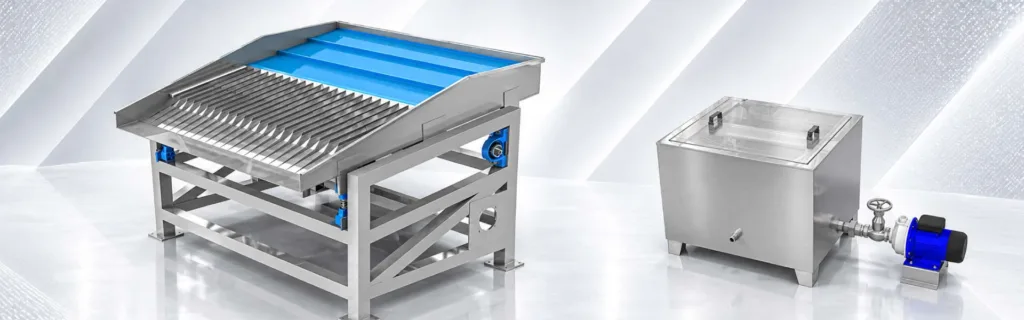
Read also: Industrial machinery maintenance: How to prevent equipment failures
Design a more efficient food production line with Arrowhead Engineers
Arrowhead Engineers combines mechanical design, manufacturing, and industrial expertise to develop solutions tailored to real operating requirements. Beyond food processing, the company also works across recycling, wood processing, parking systems, and metal components, supporting a wide range of industrial applications.
From a new production line to the optimization of an existing installation, every project starts with understanding the process, its constraints, and its long-term requirements.
The right engineering approach can turn individual production stages into one efficient, reliable, and well-integrated system.
MORE ARTICLES
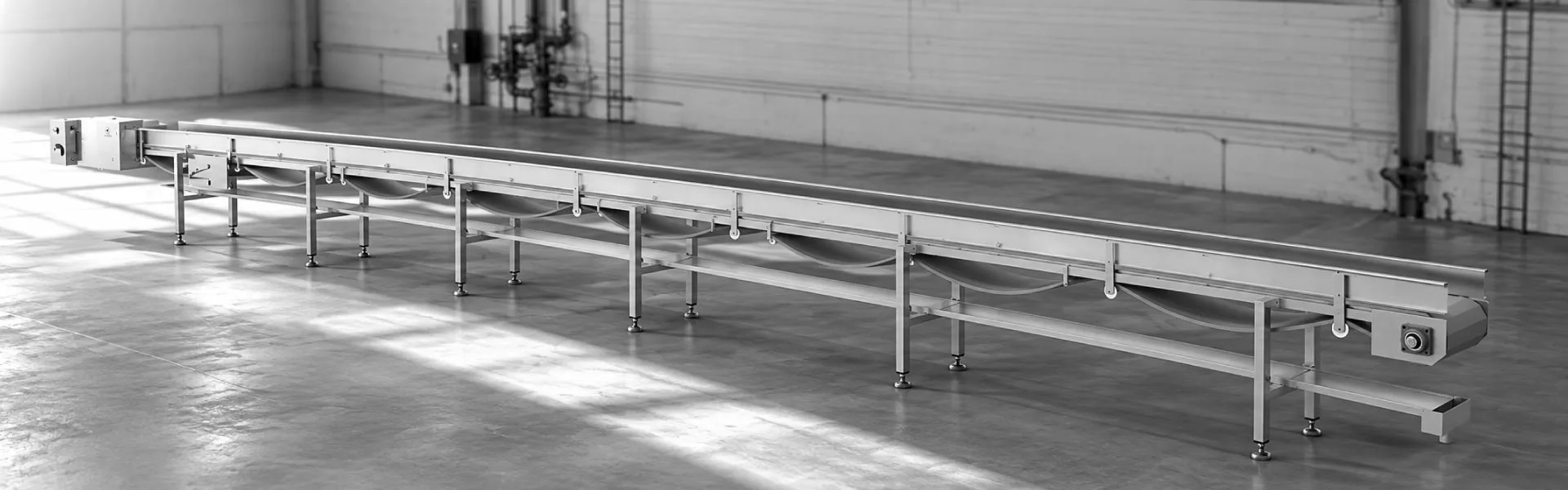
Custom Engineering: Tailored engineering solutions
Welding & fabrication: Complete solutions for metal structures