R&D in Industry: What It Is and Why It Is Critical
What Is R&D and What Is Its Role?
The term R&D comes from the words Research and Development. You may also come across it written as RnD or RND.
So, if you are wondering “what is R&D?”, it is an organized process aimed at creating new products, machinery, systems, and production processes or improving existing ones.
Research focuses on understanding the problem. It examines the project’s needs, technical parameters, limitations and possible options.
Development takes the next step. It transforms the data and ideas into something applicable, such as:
• a new industrial machine,
• a functional prototype,
• a specially designed component,
• an improved production layout,
• an automation solution,
• a redesigned mechanism.
Therefore, having a good idea is not enough. It must be possible to design, manufacture, test, and operate it reliably.
This is the main role of R&D: to bridge the gap between theory and practical application, limiting failures and creating technically documented solutions.
What Does R&D Involve in Industry?
Industrial R&D may involve the development of a new product, the redesign of a machine, the improvement of a production line, or the creation of a special structure. Every project is different. This is why the process must begin with the actual requirements of your business rather than with a ready-made, general solution.
At Arrowhead Engineers, R&D services include the study of needs and technical requirements, the preparation of technical files, and support throughout the certification process. The course of a project may include idea development, mechanical design, the creation of manufacturing drawings, prototype construction, and verification of compliance with the required standards.
In this way, the solution does not remain at the concept stage. It becomes technically complete and can move forward towards construction and practical use with greater safety.
Learn more: Food processing machinery: How to choose the right equipment and what to consider
Food Industry
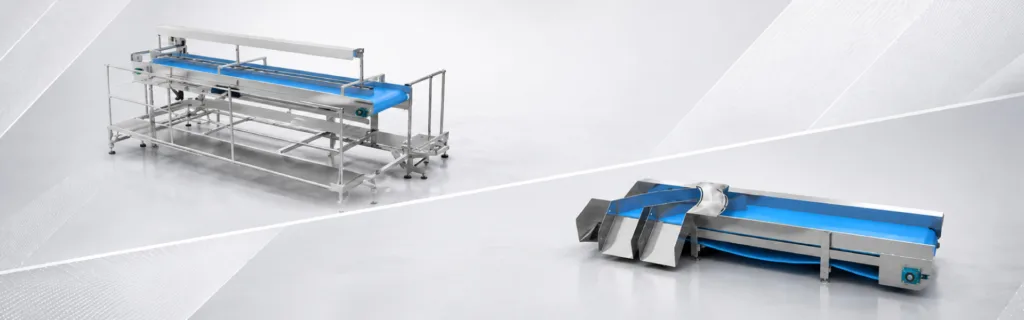
The food industry requires equipment that combines productivity, hygiene, precision, and ease of cleaning. At the same time, every system must be adapted to the product and the production flow of the specific facility.
R&D can be used for the design or improvement of solutions such as:
• conveying and feeding systems,
• washing and cleaning machinery,
• food processing lines,
• pasteurization, mixing and filling equipment,
• product sorting and classification systems.
The objective is not only to increase production speed. The equipment must integrate smoothly into the line, support consistent quality, and facilitate daily operation and maintenance.
Recycling Industry
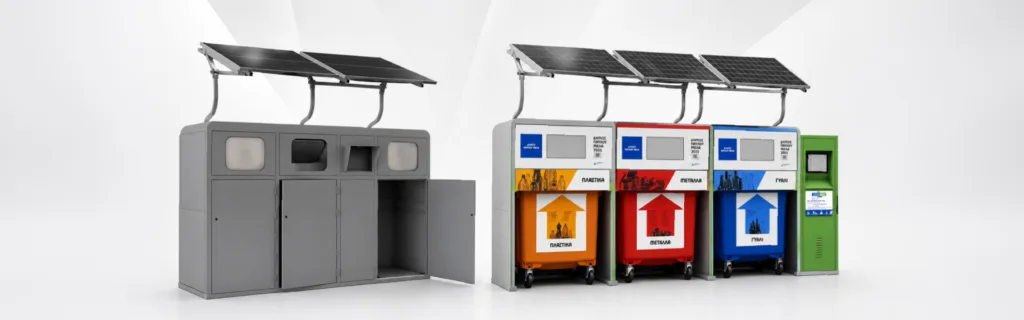
In the recycling industry, research and development focuses on more effective collection, management and recovery of materials.
Solutions may include:
• autonomous recycling stations,
• material collection and weighing systems,
• metal structures for containers of different capacities,
• recyclable material management equipment,
• energy autonomy systems and facility support systems.
Through R&D, factors such as the durability of the structure, capacity, ease of use, and the ability to adapt the system to the space where it will be installed are examined.
Wood Processing Industry
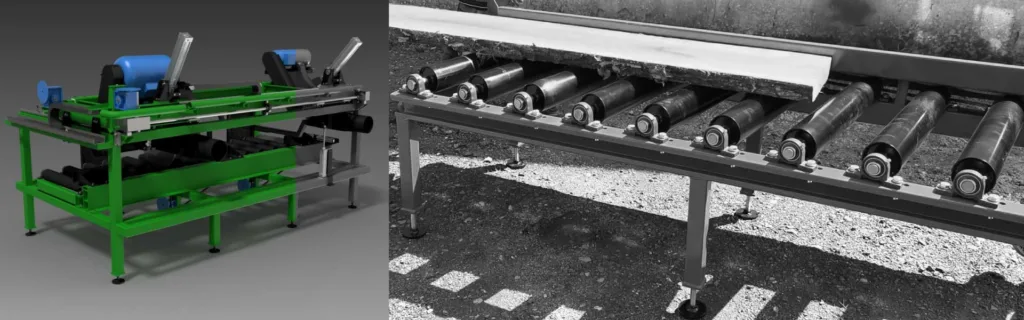
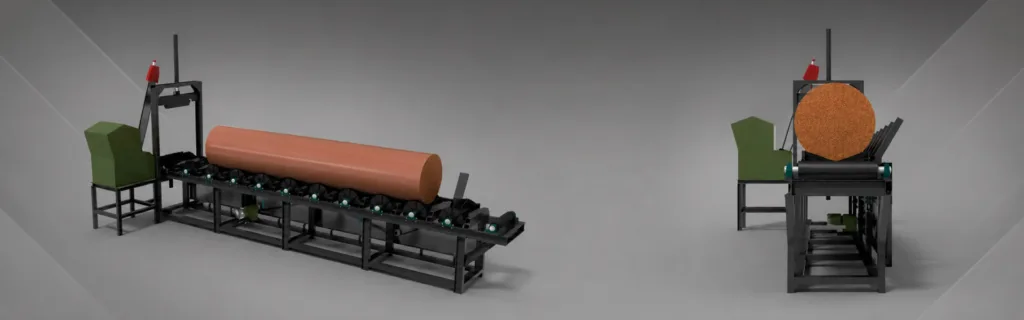
Wood processing requires equipment that offers precision, stability, and durability during continuous operation. Even a small deviation can lead to material loss or inconsistency in the final result.
R&D can be applied to solutions such as:
• wood and panel conveying systems,
• feeding mechanisms,
• cutting and processing machinery,
• stacking and pallet management systems,
• metal structures that support production.
Through proper design, you can achieve a smoother workflow, better use of materials, and greater repeatability in production.
Read also: Wood processing machinery: What a modern production facility needs
Parking Systems
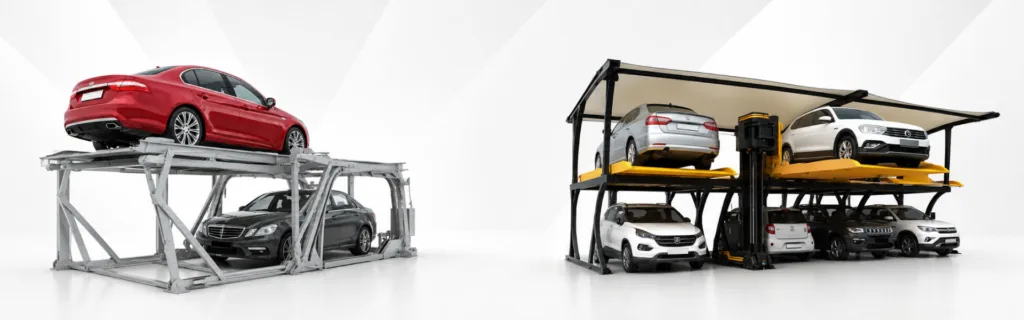
In parking systems, the main objective is to make better use of the available space. Through the appropriate design, more parking spaces can be created without requiring a corresponding expansion of the facility.
The solutions mainly include:
• mechanical multi-level parking systems,
• automatic and semi-automatic parking systems,
• special structures for commercial and residential buildings.
For their development, loads, vehicle dimensions, drive mechanisms, and safety systems are examined. Precision is crucial, as the structure must remain stable, functional and easy to use during every operating cycle.
Design and Development of Metal Components
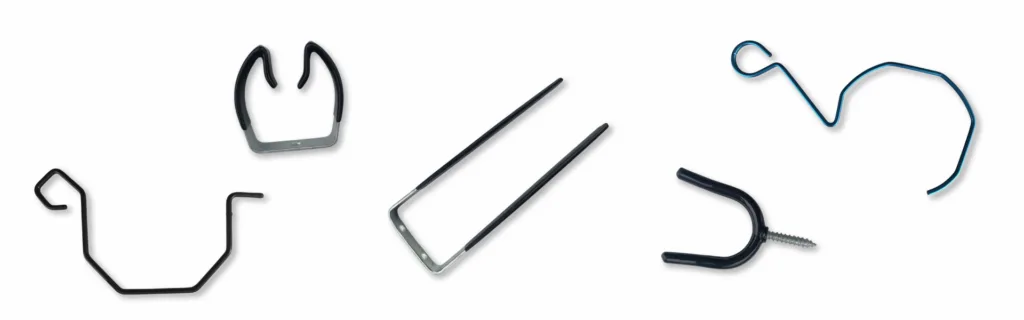
R&D is not limited to large machinery. It can also involve smaller metal components that must have specific dimensions, strength and functionality.
The main categories include:
• supports and mounting bases,
• hooks and organizational components,
• metal structures made from sheet metal or wire,
• special components for professional and industrial applications,
• protected or coated metal structures.
The development process takes into account the use of the component, the loads it will be subjected to, the appropriate material and the production method. In this way, a functional and durable solution suitable for consistent production is created.
Why Is R&D Critical to the Development of an Industry?
Production is constantly changing. Requirements are becoming more complex, margins for error are becoming smaller, and the need for flexibility is increasing.
Can a business remain competitive by using the same methods forever? Usually not.
R&D allows you to examine what is not working as well as it could and proceed with targeted improvements. Typical examples of research and development include automating a production stage, reducing unnecessary movements, adapting a machine to a new product, or developing equipment that is not available ready-made on the market.
The benefit is not only technical.
A properly studied solution can reduce delays, facilitate maintenance, improve safety and make better use of the available resources. At the same time, it helps you invest with greater certainty, because decisions are based on studies, drawings and tests rather than assumptions.
R&D can also help you respond to new market needs. When the product, packaging or required production volume changes, the existing equipment is not always sufficient. The ability to adapt and develop new solutions therefore becomes a real competitive advantage.
You may also be interested in: Industrial machinery maintenance: How to prevent equipment failures
From the Initial Idea to a Reliable Industrial Solution
Every R&D project begins with basic questions.
What needs to change?
Which problem needs to be solved?
And which solution can be safely applied under real production conditions?
From that point onwards, an organized process follows.
The idea is evaluated, the technical specifications are defined, the manufacturing drawings are prepared and, where required, a prototype is created. The necessary checks are then carried out, and the technical documentation that supports construction, operation, maintenance and certification is gathered.
This process is what makes the difference between an interesting idea and a solution that can operate reliably in practice. The more thoroughly the requirements are examined from the beginning, the easier it is to limit redesigns, failures, and delays during implementation.
Arrowhead Engineers can support you throughout all the above stages, transforming complex technical requirements into functional and documented solutions. Whether you want to develop a new machine or improve an existing process, the right R&D approach helps you move from the idea to its application through clear steps and with technical safety.
Contact the Arrowhead Engineers team, present your business’s needs, and explore how they can be developed into a complete industrial solution.
MORE ARTICLES
Types of conveyor systems: How to choose the right one for your production line
Custom Engineering: Tailored engineering solutions